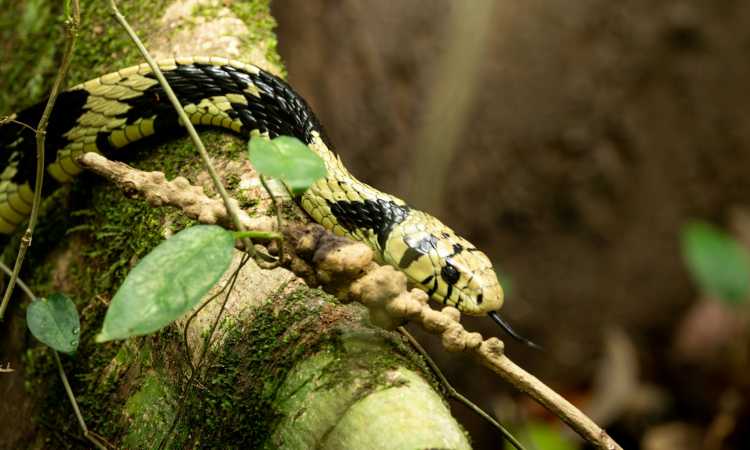
Snakes are reptiles that crawl on the ground, climb trees, and swim in water. Their greatest threat is humans, which has led to a decline in their numbers in some areas. In Semuliki National Park, snakes still thrive.
Some are venomous and use poison to kill prey or defend themselves, while others are non-venomous and kill by squeezing their prey until it cannot breathe.
There are cases where dangerous snakes like black mambas have been seen swallowing large animals, and they can even attack humans. This is why you must be very careful in the jungle and always follow your tour guide’s instructions.
Some of the snakes found in Semuliki National Park include:
- Gabon Viper: The largest and heaviest viper in Africa, with black and brown skin patterns mixed with golden spots. Its body build allows it to blend easily with the forest floor.
- Boomslang: Usually found in trees. They are highly venomous and use their poison to weaken prey, including humans. Though shy, they can be aggressive if threatened.
- Black Mamba: Known as one of the most dangerous snakes. Despite the name, they are not black on the outside but have a dark mouth interior. They are fast, venomous, and feared for their deadly bite.
- Green Mamba: Poisonous but less aggressive than the black mamba. They live in bushes, trees, and shrubs.
- Puff Adder: Often found in savannah plains like Semuliki. They feed on rodents and are rarely seen by tourists.
- Rock Python: The largest snake in Uganda, growing up to five meters long. They are non-venomous and kill prey by strangling before swallowing it whole. After eating, they may rest in one place for up to two months. Their prey includes small antelopes, large rodents, and sometimes young children, so parents near forests or tall grass areas should be extra cautious.
Always respect the park’s rules and listen to your guide when exploring snake habitats.
Book Now